Yardi™ rent roll analysis: lease exposure, WAULT and occupancy

Yardi™ rent roll analysis becomes more useful when teams can compare lease terms over time. A current rent roll describes today's recorded position, but investment decisions also need the lease breaks, incentives, arrears and vacancies that were known at earlier reporting dates.
A historical warehouse can connect leases to units, properties and tenant groups, helping asset managers distinguish contractual income from cash collection and future exposure.
Why a current rent roll can understate risk
A lease can have five years to contractual expiry and a tenant break in two years. Rent-free periods can make headline annual rent look stronger than near-term cash receipts. A tenant trading under several legal names can represent a larger concentration than individual lease rows suggest.
Occupancy also needs a definition. Area-based occupancy and rental-value-based vacancy answer different questions. Excluding development space or changing the reporting perimeter can alter the percentage even when no tenant has moved.
Real-world example: occupancy depends on the reporting perimeter
EPRA's September 2024 Best Practices Recommendations identify inconsistent vacancy disclosures as an industry reporting problem and define a vacancy measure based on estimated rental value. This provides a concrete reason to preserve both the underlying units and the metric definition. See the EPRA reporting guidelines.
British Land's 2025 results provide a practical example: campus occupancy was 97% excluding asset management initiatives and recently completed developments, compared with 83% on an EPRA basis. The perimeter materially changes the reported result. See the operational update on page 3.
A warehouse should therefore label the calculation basis in every output. An internal area-based dashboard should not be presented as the EPRA vacancy measure merely because both results are percentages.
Worked scenario: five years to expiry, two years to break
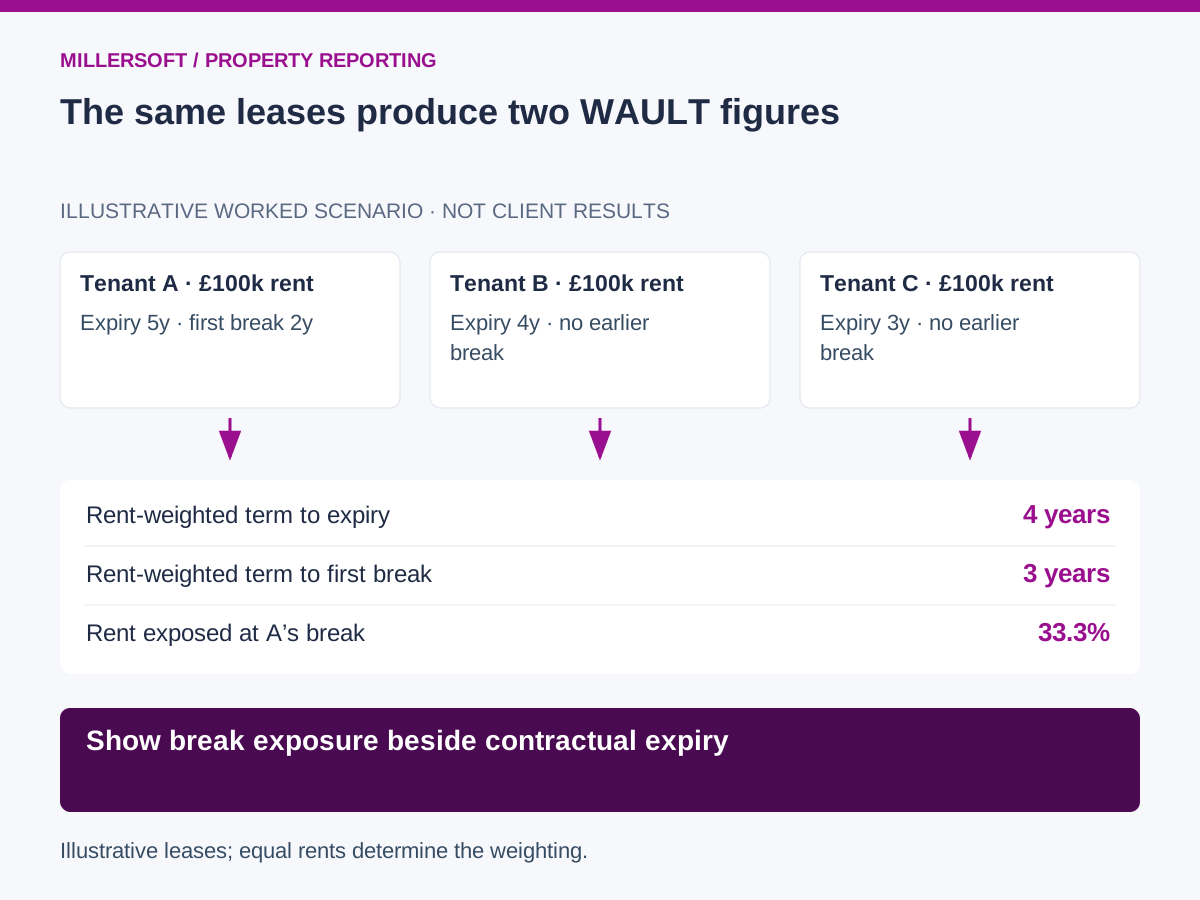
In this illustrative portfolio, three tenants each pay £100,000 of annual contractual rent. Their remaining terms to expiry are five, four and three years. Tenant A also has a break option in two years.
| Tenant | Annual rent | Years to expiry | Years to first break or expiry |
|---|---|---|---|
| A | £100,000 | 5 | 2 |
| B | £100,000 | 4 | 4 |
| C | £100,000 | 3 | 3 |
Rent-weighted average unexpired lease term (WAULT) to expiry is (100,000 × 5 + 100,000 × 4 + 100,000 × 3) / 300,000 = 4 years. On a first-break-or-expiry basis it is 3 years. Those results describe different risks and should be reported together with their definitions.
Tenant A also represents one-third of contractual rent. A break exercise could therefore affect a material share of income, even though the expiry-only WAULT looks comfortable. This is exposure, not a prediction that the tenant will leave.
 (opens the full-size image in a new tab)
Build lease history at the right level
Retain lease and amendment identifiers, unit links, commencement dates, expiry dates, break dates and notice deadlines. Effective-dated rent schedules should distinguish headline rent, stepped rent, incentives and service charges.
Keep lease events separate from the rent roll snapshots used in published reports. A backdated amendment received in May should not silently rewrite the March pack. Both the effective date and the date the information became available matter.
Link tenant legal entities to a reviewed parent-group mapping to analyse concentration. Preserve the mapping version so a later corporate acquisition does not alter earlier concentration reports without explanation.
Turn the model into an asset-management review
- Reconcile lease counts, units and total rent to a signed-off source extract.
- Validate missing break dates, overlapping lease periods and duplicate unit assignments.
- Calculate expiry and break exposure in agreed time bands.
- Compare contractual rent with billed amounts, collections and arrears separately.
- Publish the snapshot date, reporting perimeter and metric definitions alongside the results.
Useful measures include the proportion of rent exposed to breaks within two years, overdue receivables by tenant group and the number of leases with incomplete terms. A pilot should let an asset manager trace an exposure total to the signed lease evidence.
Frequently asked questions
Does WAULT predict rental cash flow?
No. It summarises remaining lease term using a chosen weighting. Cash flow also depends on rent schedules, incentives, collection timing, defaults and reletting assumptions.
Can an old rent roll be rebuilt from today's lease table?
Only if amendment and event history has been retained. Regular dated snapshots reduce reliance on reconstructing overwritten records.
Continue exploring Yardi™ reporting
Back to the Yardi™ data warehouse overview.
- Yardi™ cash flow forecasting and property fund liquidity
- Yardi™ intercompany reconciliation and multi-entity reporting
Make your property reporting explainable
Talk to Millersoft about a focused Data Vault Engine & Studio pilot using your property data, reporting definitions and control requirements.
Discuss your reporting challengeYardi™ is a trademark of Yardi™ Systems, Inc. Millersoft is not affiliated with Yardi™ Systems, Inc.